A smoking deep fryer is more than just an inconvenience—it is often a warning sign that your fryer oil or equipment needs attention. Excessive smoke can affect food quality, create an uncomfortable kitchen environment, increase operating costs, and even pose safety risks if left unaddressed.
Fortunately, most causes of smoking fryer oil are easy to identify and prevent. By understanding why your fryer is producing excessive smoke, you can extend oil life, improve fried food quality, and keep your kitchen operating efficiently.
Why Fryer Oil Smokes
Cooking oil naturally produces some vapor during frying, especially when food is added. However, continuous or excessive smoke usually indicates that the oil is beginning to deteriorate or is being used improperly.
Smoke develops when oil starts breaking down under heat, producing compounds that reduce frying performance and affect food quality.
1. Your Fryer Oil Has Reached the End of Its Life
One of the most common causes of excessive smoke is old, degraded frying oil.
As oil is repeatedly heated, it gradually breaks down due to oxidation, heat, moisture, and food particles. Over time, it loses its ability to withstand frying temperatures and begins smoking at lower temperatures.
Signs your oil may need replacing include:
Dark brown or black color
Thick or sticky consistency
Strong burnt odors
Excessive foaming
Bitter-tasting food
Heavy smoke during normal cooking
If several of these symptoms are present, it is likely time for an oil change.
2. The Fryer Temperature Is Too High
Every cooking oil has a smoke point—the temperature at which it begins to break down rapidly.
Operating your fryer above the recommended temperature causes oil to deteriorate much faster, producing smoke, carbon deposits, and burnt flavors.
Most commercial frying is performed between 325°F and 375°F (163°C to 190°C) depending on the product being cooked.Always verify that your thermostat is accurate and avoid increasing temperatures simply to speed up cooking.
3. Dirty Oil Contains Burnt Food Particles
Every batch of food leaves behind crumbs, breading, seasoning, and small food particles.
If these particles remain in the oil, they continue to burn throughout the day, creating smoke and unpleasant odors. Regular skimming and filtration remove these contaminants before they can accelerate oil breakdown.
4. Your Fryer Needs Cleaning
Sometimes the problem isn’t the oil—it’s the fryer itself. Carbon deposits and burnt grease can accumulate on:
Heating elements
Fryer walls
Baskets
Drain areas
Filter components
These residues continue burning every time the fryer is heated, contributing to excessive smoke even after fresh oil has been added. So if your fryer is smoking a lot, check if it needs maintenance cleaning. Routine fryer cleaning helps eliminate these deposits and restores efficient operation.
5. Moisture Is Breaking Down the Oil
Water is one of the biggest enemies of frying oil.
Ice crystals, wet food, and excess moisture accelerate oil degradation while increasing bubbling, splattering, and smoking.
Whenever possible, shake excess ice from frozen foods. Drain washed ingredients thoroughly and avoid introducing unnecessary water into the fryer. Reducing moisture helps preserve oil quality while improving kitchen safety.
6. Different Foods Affect Oil Differently
Some menu items leave behind more residue than others.
Heavily breaded foods, battered products, sugary coatings, and foods containing loose starch release particles that burn quickly and contamulate the oil.
Using dedicated fryers for heavily breaded products can help maintain cleaner oil and reduce excessive smoking.
How to Reduce Fryer Smoke
Preventing excessive smoke starts with good daily oil management.
Simple practices include:
Filter fryer oil regularly.
Skim floating crumbs throughout the day.
Maintain proper frying temperatures.
Clean fryers thoroughly before adding fresh oil.
Replace oil before it becomes excessively degraded.
Keep excess moisture out of the fryer.
Following these steps helps extend oil life while producing more consistent fried foods.
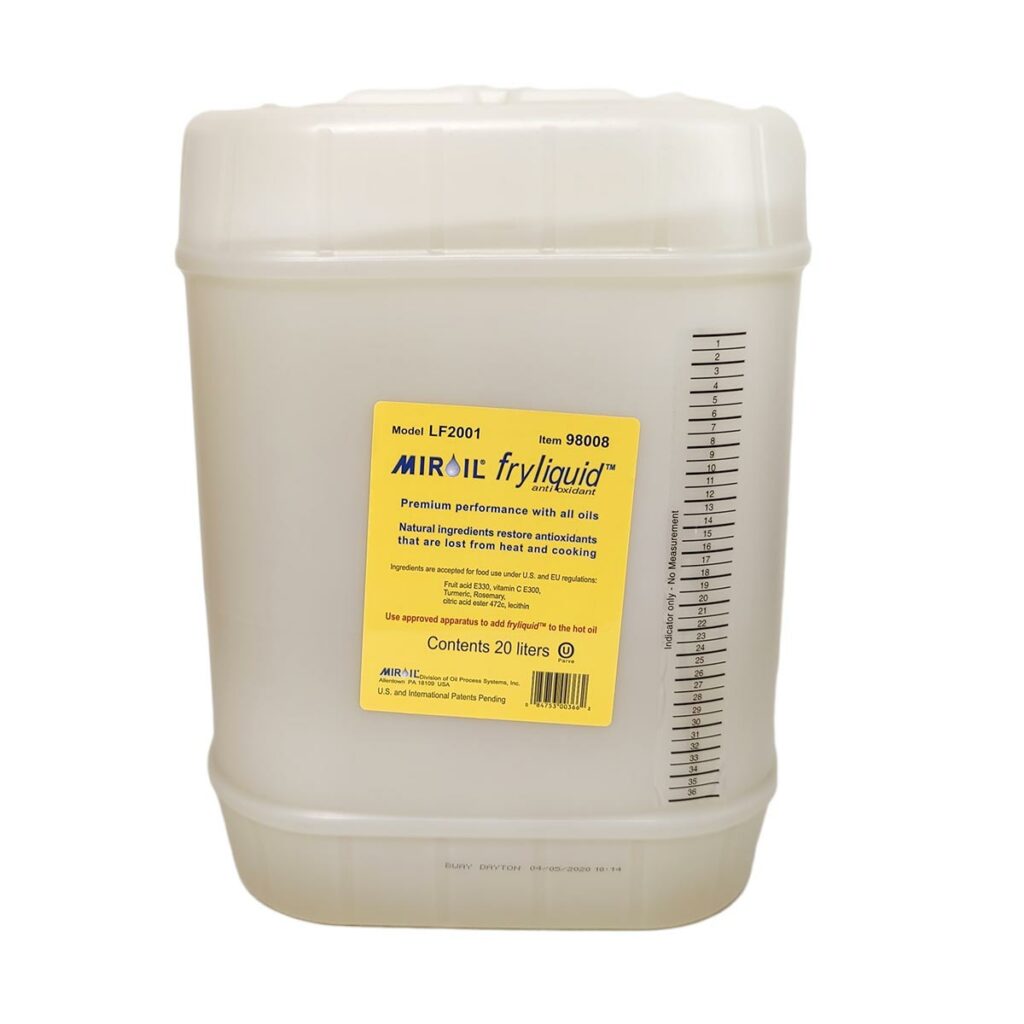
Support Cleaner Oil with MirOil FryLiquid
Many commercial kitchens use MirOil FryLiquid to help maintain cleaner, more stable frying oil throughout the day.
Formulated with natural antioxidants, FryLiquid helps slow the chemical reactions that lead to oil breakdown. By restoring oil stability during high-temperature frying, it helps reduce smoking, foaming, carbon buildup, and gum formation while improving overall frying performance.
Commercial kitchens use MirOil FryLiquid to help:
Reduce smoking and foaming
Extend fryer oil life
Minimize carbon and gum deposits
Improve fried food quality
Reduce oil absorption
Lower overall oil replacement costs
When used alongside regular filtration and proper fryer maintenance, FryLiquid supports a more complete fryer oil management program.
A smoking fryer is often telling you that something needs attention. Whether the cause is degraded oil, excessive cooking temperatures, food debris, or poor maintenance, addressing the issue early can prevent higher operating costs and improve food quality.
By maintaining clean equipment, filtering oil regularly, and using products that help protect frying oil, commercial kitchens can reduce smoke, extend oil life, and deliver consistently crisp, great-tasting fried foods every day.