
Sanitizer Test Strips: Why Accurate Testing Matters in Commercial Kitchens
Maintaining proper sanitation levels is one of the most important responsibilities in any commercial kitchen. Restaurants, cafeterias, catering operations, bars, food trucks, and other food-service businesses rely on sanitizer solutions to help keep food-contact surfaces, utensils, and equipment properly sanitized.
But simply adding sanitizer to a sink or bucket does not guarantee that the solution is at the correct concentration. Too little sanitizer may not provide the intended level of sanitation, while excessive concentrations can also create problems. This is why routine sanitizer testing should be part of every food-service operation’s daily sanitation practices.
Our range of Sanitizer Test Strips solutions provide a quick and convenient way to check sanitizer concentration and help kitchen staff make informed adjustments.
Why Sanitizer Testing Is Important
Maintaining proper sanitation levels is one of the most important responsibilities in any commercial kitchen. Restaurants, cafeterias, catering operations, bars, food trucks, and other food-service businesses rely on sanitizer solutions to help keep food-contact surfaces, utensils, and equipment properly sanitized.
But simply adding sanitizer to a sink or bucket does not guarantee that the solution is at the correct concentration. Too little sanitizer may not provide the intended level of sanitation, while excessive concentrations can also create problems. This is why routine sanitizer testing should be part of every food-service operation’s daily sanitation practices.
Our range of Sanitizer Test Strips solutions provide a quick and convenient way to check sanitizer concentration and help kitchen staff make informed adjustments.
Chlorine/Bleach Sanitizer Solutions
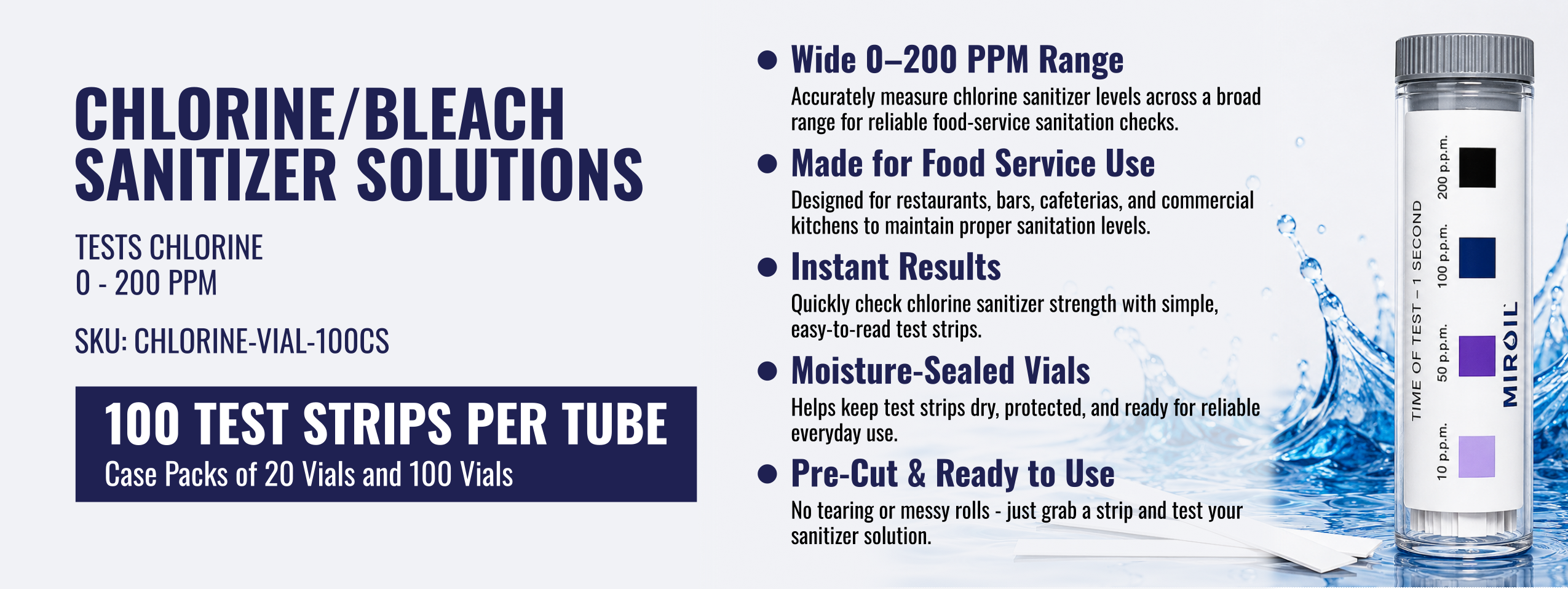
The Chlorine/Bleach Sanitizer Test Strips are designed to measure chlorine sanitizer concentrations across a 0–200 ppm range.
These strips are useful for food-service operations that use chlorine- or bleach-based sanitizing solutions. The color-based test allows staff to compare the reacted strip with the concentration scale provided with the product.
Because the strips are pre-cut and ready to use, employees do not need to tear pieces from a larger roll. This makes them convenient for routine checks throughout a busy workday.
Quat/Quaternary Ammonium Sanitizer Solutions
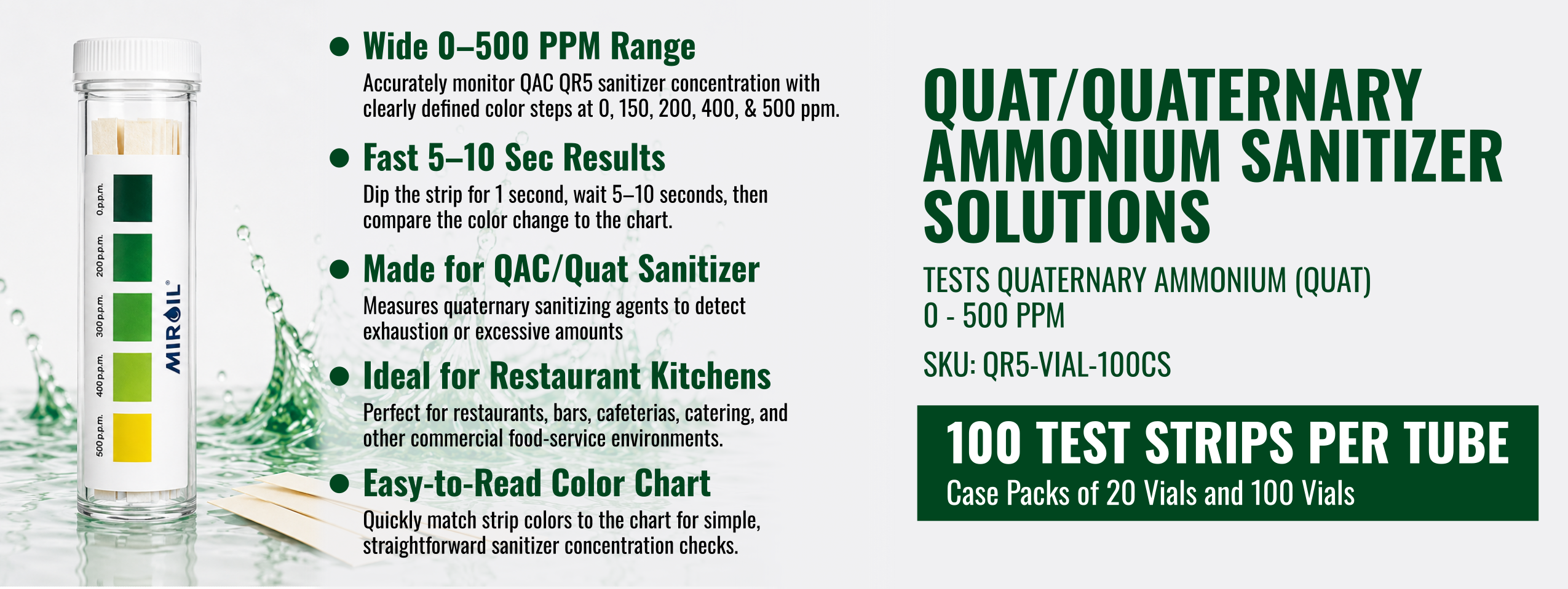
The Quat/Quaternary Ammonium Sanitizer Test Strips are designed for solutions containing quaternary ammonium compounds, commonly referred to as quats or QAC sanitizers.
These strips provide a 0–500 ppm testing range, allowing staff to check the concentration of quat sanitizer solutions against the product’s color chart.
They are particularly useful in restaurants, commercial kitchens, cafeterias, catering operations, bars, and other food-service environments where quat-based sanitizers are part of the sanitation program.
How to Use Sanitizer Test Strips
Using the strips is straightforward, but employees should always follow the specific instructions supplied with the test strips and the sanitizer manufacturer’s instructions.
1. Identify the sanitizer being used
First, determine whether the solution contains chlorine/bleach or quaternary ammonium (quat/QAC) sanitizer.
Use the test strip designed for that sanitizer. The two products are not interchangeable.
2. Take a sample of the sanitizer solution
Collect a representative sample of the solution you want to test. Make sure the solution is properly mixed according to the sanitizer manufacturer’s directions.
3. Dip the test strip
Place the appropriate test strip into the sanitizer solution according to the product instructions. Avoid unnecessary handling of the reactive portion of the strip.
4. Observe the color change
Remove the strip and allow the reaction to develop for the specified amount of time.
The strip’s color will correspond to a concentration on the provided comparison chart.
5. Compare the result with the required concentration
Compare the color on the test strip with the manufacturer’s chart to determine the approximate sanitizer concentration.
If the concentration is not within the range required for the specific sanitizer and application, follow the sanitizer manufacturer’s instructions and your establishment’s food-safety procedures for correcting the solution.
Make Testing Part of the Daily Routine
Sanitizer testing should not be something that only happens when a kitchen manager suspects a problem. A consistent testing routine can help employees identify changes in sanitizer concentration before they become a larger concern.
Test strips can be kept in an easily accessible location near sanitation stations so employees can quickly perform checks during routine operations.
For example, a kitchen may incorporate sanitizer testing into its opening procedures, during scheduled sanitation checks, and whenever a new sanitizer solution is prepared or replenished.
The exact testing frequency should follow applicable regulations, the sanitizer manufacturer’s instructions, and the food-service operation’s established sanitation procedures.
Explore our sanitizer solutions


Easy Testing Supports Better Kitchen Practices
Commercial kitchens already have countless tasks to manage. Sanitizer testing should therefore be simple enough that employees can perform it consistently.
FryOilSaver’s sanitizer test strips offer a practical solution for operations using chlorine/bleach or quat sanitizers. With clearly defined concentration ranges and easy-to-read color comparisons, they help turn sanitizer monitoring into a straightforward part of everyday kitchen operations.
The goal isn’t simply to use sanitizer—it’s to know what concentration you’re working with.
By incorporating regular testing into your sanitation routine, your team can replace guesswork with a simple verification step that supports more consistent food-service sanitation practices.
Choose the Right Test Strip
Whether your operation uses chlorine/bleach or quat sanitizer, selecting the appropriate test strip is the first step. Keep the appropriate test strips on hand, train employees on proper use, and make sanitizer testing a routine part of your kitchen’s sanitation process.