Why Antioxidants Matter in Frying Oil

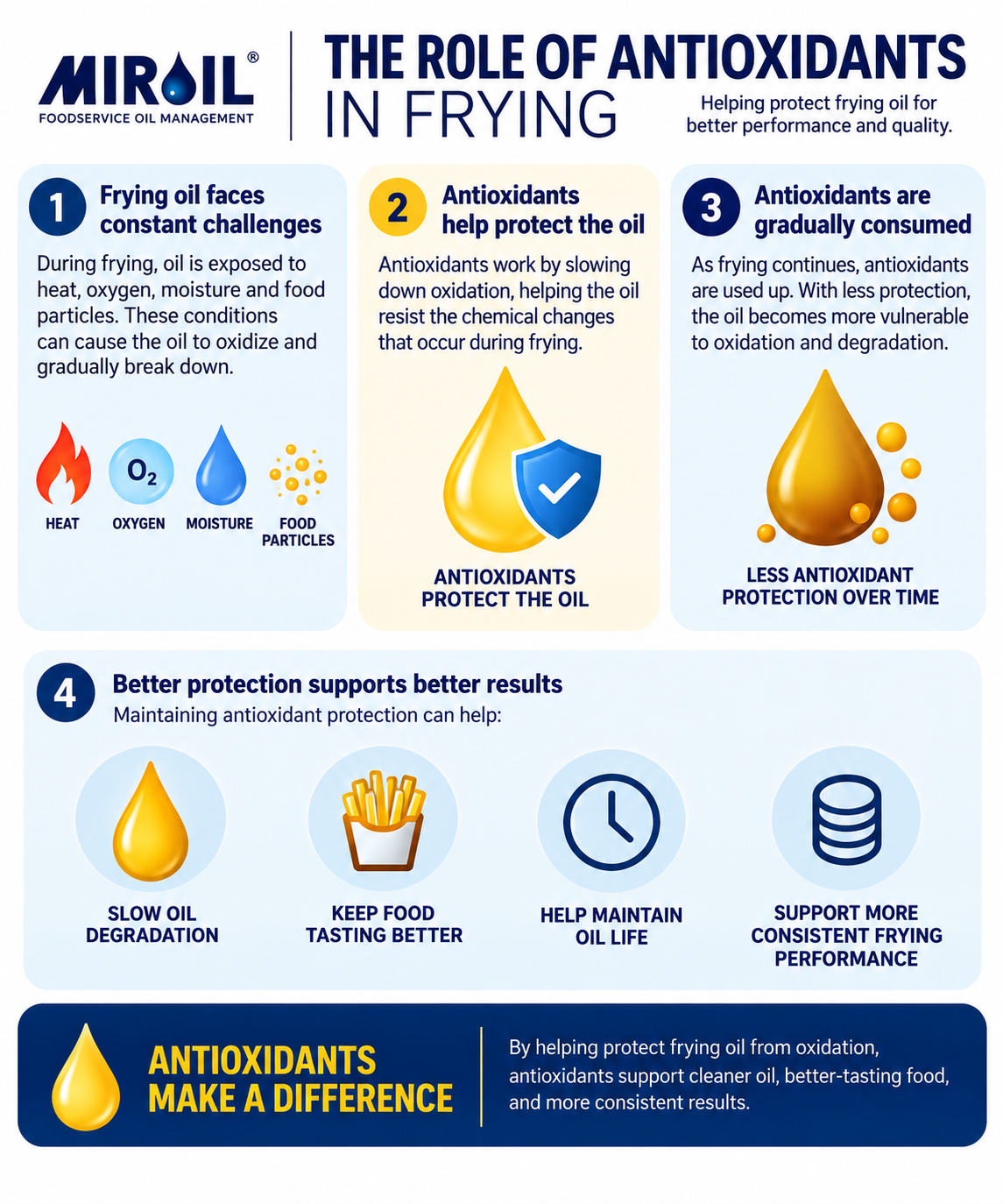
Frying oil is exposed to heat, oxygen, and moisture every time food enters the fryer. Over repeated cooking cycles, these conditions can cause the oil to oxidize and gradually change its composition. For commercial kitchens and food manufacturers, managing these changes is an important part of maintaining consistent frying performance.

Antioxidants play an important role in protecting oil from oxidation. Understanding how they work can help foodservice operators and food manufacturers make better decisions about frying oil management.

What Are Antioxidants?

Antioxidants are compounds that help protect oil from oxidation. Frying oils naturally contain antioxidants, while additional antioxidants may also be added during oil production.

When oil is heated, antioxidants are consumed as they help protect the oil against oxidation. As frying continues, the amount of available antioxidant protection decreases.

Once frying oil has gone through repeated heating cycles, maintaining antioxidant protection becomes an important consideration in oil management.

What Happens When Oil Is Heated?

Frying requires high temperatures, and the oil is repeatedly exposed to heat throughout production. At the same time, the surface of the oil is exposed to oxygen.

These conditions promote oxidation. As oxidation progresses, the oil can form oxidized fatty acids and other breakdown compounds.

Continued heating can cause these compounds to undergo additional reactions, producing secondary and tertiary oxidation products.

Over time, these changes can affect the oil’s characteristics and its performance during frying.

Why Oxidation Matters

Oxidation is one of the primary processes responsible for frying oil degradation.

As oxidation progresses, the oil can develop undesirable odors and flavors. Changes in oil composition can also affect frying performance and the quality and consistency of finished food.

For high-volume frying operations, oil can be exposed to these conditions for many hours each day. Managing oxidation is therefore an important part of maintaining oil quality.

Antioxidants Are Consumed During Frying

Antioxidants do not provide unlimited protection.

They are consumed as they perform their protective function. This means that the antioxidant protection present in fresh oil can decrease as the oil is repeatedly heated.

This is an important distinction for food manufacturers. Simply keeping oil in the fryer for a longer period does not mean that the oil retains the same level of antioxidant protection throughout its use.

As antioxidant protection decreases, the oil becomes increasingly exposed to oxidation and thermal degradation.

Replenishing Antioxidant Protection

One approach to oil management is to replenish antioxidants as they are consumed.

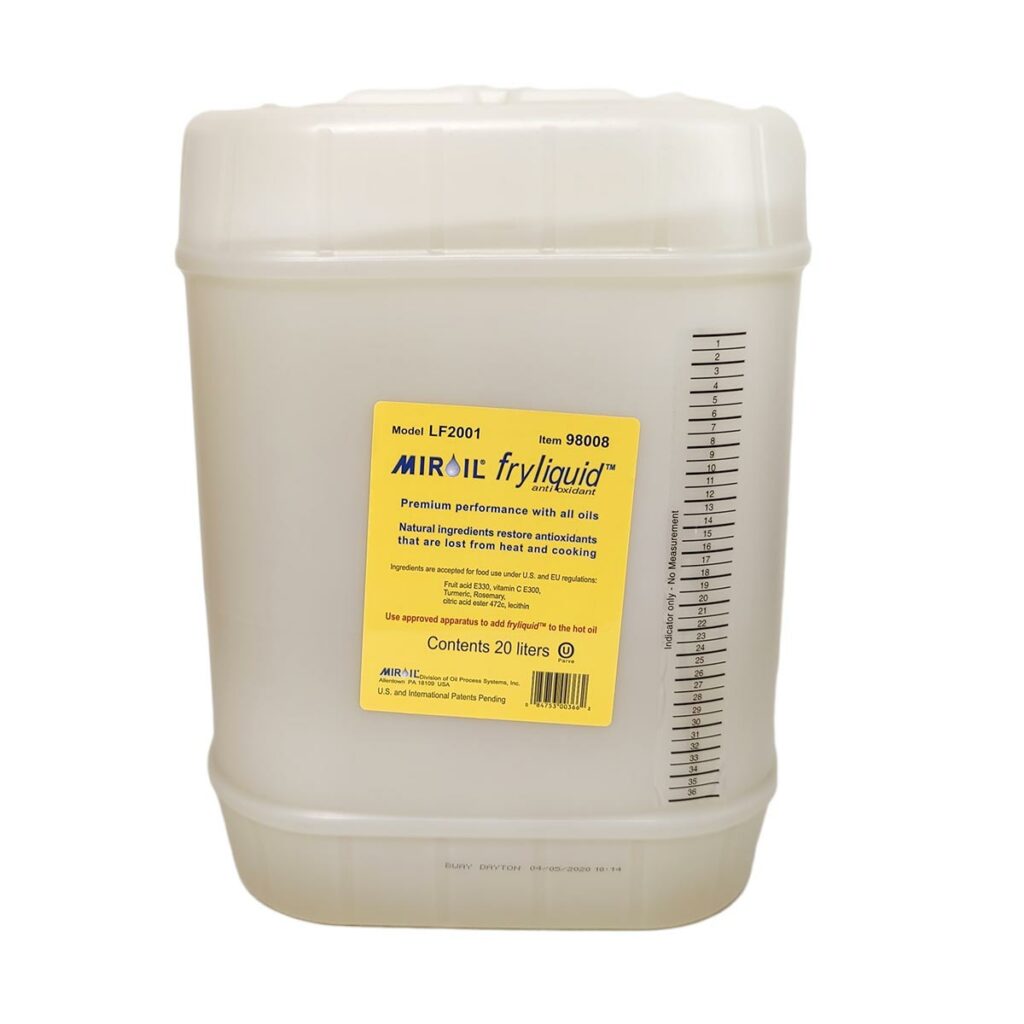
FryLiquid® is designed to add antioxidants back into frying oil and help protect the oil from thermal degradation and oxidation reactions.

Rather than treating oil management solely as a matter of extending the number of frying hours, FryLiquid® is intended to support the oil while it is being used.

This makes antioxidant management one component of a broader frying oil management program.

Antioxidants and Frying Temperature

Temperature also plays an important role in oil degradation.

Higher temperatures can accelerate oxidation and other chemical reactions. Managing frying temperature appropriately can therefore help reduce the rate at which oil deteriorates.

FryLiquid® is designed to support frying at lower temperatures while maintaining cooking performance. The FryLiquid® approach describes temperature reductions of approximately 20°F to 50°F in some frying operations.

The objective is not simply to use the lowest possible temperature. Frying temperature must still provide the cooking time, product quality, and production performance required by the operation.

Antioxidants and Food Quality

The condition of frying oil can affect the food being produced.

As oil degrades, changes in its composition can contribute to undesirable flavors and odors. Oil condition can also influence frying performance, appearance, and oil absorption.

Maintaining better oil condition can therefore be important for manufacturers producing large quantities of fried foods where consistency from one production run to another is essential.

Antioxidant protection is one part of maintaining that condition.

Antioxidants Are Only One Part of Oil Management

Adding antioxidant protection does not replace other fryer oil management practices.

A complete approach can include:

  • Regular oil filtration
  • Removal of food particles and sediment
  • Daily oil freshening
  • Appropriate frying temperatures
  • Monitoring oil condition
  • Proper fryer cleaning and maintenance
  • Consistent FryLiquid® application

Each practice addresses a different part of the frying process.

Filtration helps remove physical contaminants. Freshening introduces fresh oil. Temperature management controls the conditions under which degradation occurs. Oil testing provides information about the condition of the oil. FryLiquid® provides additional antioxidant support.

Together, these practices can provide a more structured approach to managing frying oil.

A More Complete Approach to Frying Oil Management​

Antioxidants are important because they help protect frying oil from oxidation, but they are only one part of the larger frying process.

Heat, oxygen, moisture, cooking time, filtration, freshening, and oil quality all interact during production. Managing these factors together can help manufacturers maintain more consistent frying conditions.

For commercial kitchens and food manufacturers, maintaining antioxidant protection alongside proper temperature control, filtration, freshening, and oil-quality monitoring can provide a more comprehensive approach to fryer oil management.

Better oil management starts with understanding what is happening inside the fryer—and managing oil before degradation becomes a production problem.