
Tips to Extend Fryer Oil Life
Fryer oil naturally breaks down over time, but how quickly that happens depends largely on how it is managed. Heat, moisture, food particles, and improper handling all contribute to premature oil degradation. Understanding what causes oil to deteriorate, and how to prevent it—can help restaurants and foodservice operations reduce costs, improve fried food quality, and get more value from every batch of cooking oil.
But before that, what causes oil life to deteriorate?
What Causes Fryer Oil to Deteriorate?
Fryer oil naturally degrades over time, but several factors can significantly speed up the process. Understanding what causes oil to break down is the first step toward extending its usable life and maintaining consistently high-quality fried food.
- High temperatures – Overheating accelerates oil breakdown, causing smoking, foaming, and darkening.
- Food particles – Burnt crumbs and breading contaminate the oil and reduce its usable life.
- Moisture – Water from food speeds up oil degradation and increases splattering.
- Exposure to air – Oxygen causes oxidation, which gradually reduces oil quality.
- Heavy breading and starches – These release more residue that burns quickly and shortens oil life.
- Dirty fryer equipment – Carbon deposits and leftover residue contaminate fresh oil almost immediately.
- Infrequent filtration – Leaving contaminants in the oil allows breakdown to occur much faster.
The good news is: you can slow oil degradation, reduce operating costs, and consistently produce better-tasting fried food using the tips below.
Start with High-Quality Frying Oil
The quality of your frying oil determines how well it performs over time. Premium frying oils are formulated to withstand high cooking temperatures and resist breakdown better than lower-grade alternatives.
While quality oil may cost more initially, it often lasts longer, performs more consistently, and provides better value over its lifespan.
Begin with a Clean Fryer
Fresh oil should always be added to a clean, dry fryer.
Old carbon deposits, burnt crumbs, moisture, and leftover oil accelerate the breakdown of new oil almost immediately. Thoroughly cleaning the fryer tank, baskets, heating elements, and surrounding surfaces before refilling helps maximize the life of every fresh batch.
Fill the Fryer Correctly
Always fill the fryer according to the manufacturer’s recommended oil levels.
Most commercial fryers include fill lines for cold oil and hot oil. Overfilling can lead to spills and inefficient heating, while underfilling may expose heating elements and cause premature oil degradation.
Following the correct fill level ensures safe operation and consistent cooking performance.
Cook at the Correct Temperature
Temperature control is one of the most important factors in fryer oil management.
Oil that is consistently overheated breaks down much faster, producing excessive smoke, unpleasant odors, and carbon deposits. Cooking at the proper temperature allows food to cook evenly while reducing unnecessary stress on the oil.
Use a calibrated thermostat and avoid increasing temperatures simply to speed up cooking.
Reduce Heat During Quiet Periods
Many kitchens leave fryers operating at full temperature even when they are not actively cooking.
Lowering the thermostat or switching the fryer to idle mode during slower periods helps reduce heat exposure, slowing oil oxidation and extending its usable life. It also reduces energy consumption, helping lower utility costs.
Keep Food as Dry as Possible
Water is one of the biggest enemies of fryer oil.
Excess moisture causes oil to break down more rapidly while increasing bubbling and splattering, creating potential safety hazards for kitchen staff.Allow frozen foods to thaw only when appropriate, shake off excess ice, and remove unnecessary moisture before placing food into the fryer.
Skim Debris Throughout the Day
Small food particles left floating in hot oil quickly burn and become carbon deposits.
Regularly skimming crumbs, breading, and floating debris during service helps keep oil cleaner and prevents burnt particles from affecting food flavor and appearance.
A few seconds spent skimming throughout the day can significantly improve oil quality.
Filter Oil Frequently
One of the most effective ways to extend fryer oil life is regular filtration.
Filtering removes crumbs, sediment, carbon particles, and other contaminants that accelerate oil degradation. Cleaner oil produces more consistent cooking results while reducing smoking, foaming, and unpleasant odors.
Many modern commercial fryers include built-in filtration systems that make this process quick and convenient. Portable filtration systems and reusable filter bags also provide efficient solutions for kitchens without integrated filtration.
Explore our filter machine range and buy online
-
 MirOil BD505 55 lb Electric Fryer Oil Filter Machine
$3,487.00Original price was: $3,487.00.$2,789.60Current price is: $2,789.60. -
 MirOil BD707 75 lb Electric Fryer Oil Filter Machine
$3,737.00Original price was: $3,737.00.$2,989.60Current price is: $2,989.60. -
 MirOil 55HD 55 lb Hand Operated Fryer Oil Filter Machine
$2,123.00Original price was: $2,123.00.$1,698.40Current price is: $1,698.40.
-
 MirOil MOD1050 105 lb Electric Fryer Oil Filter Machine
$4,987.00Original price was: $4,987.00.$3,989.60Current price is: $3,989.60. -
 MirOil 75HD 75 lb Hand Operated Fryer Oil Filter Machine
$2,373.00Original price was: $2,373.00.$1,898.40Current price is: $1,898.40. -
 MirOil MOD0800 85 lb Electric Fryer Oil Filter Machine
$4,850.00Original price was: $4,850.00.$3,880.00Current price is: $3,880.00.
-
 MirOil MOD0640 70 lb Electric Fryer Oil Filter Machine
$4,487.00Original price was: $4,487.00.$3,589.60Current price is: $3,589.60. -
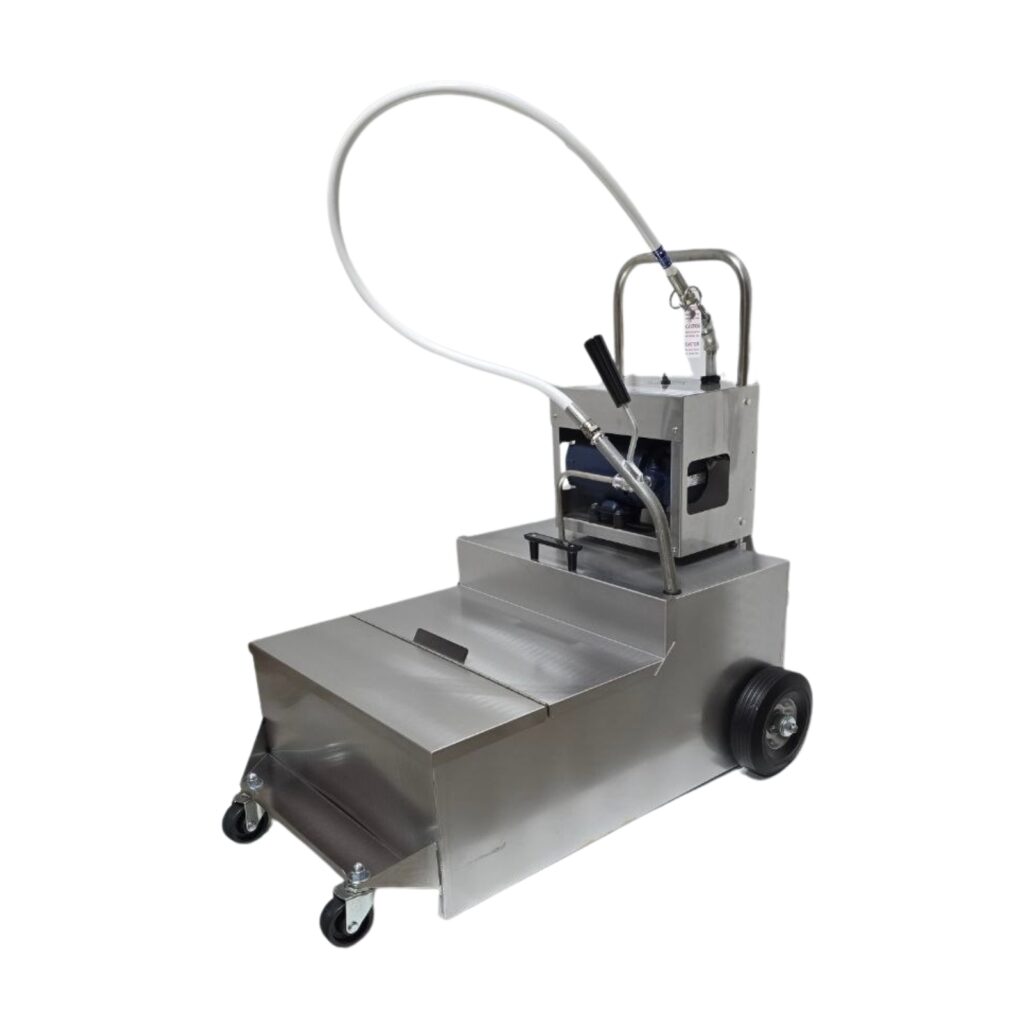 MirOil MOD1550 200 lb Electric Fryer Oil Filter Machine
$6,062.00Original price was: $6,062.00.$4,849.60Current price is: $4,849.60.
Choose Foods Carefully
Not every food affects fryer oil in the same way.
Products with heavy breading, sugary coatings, or high seasoning content tend to release more particles into the oil, causing it to deteriorate more quickly. Rotating menu items strategically and maintaining separate fryers for heavily breaded foods can help preserve overall oil quality.
Limit Heavy Starches When Possible
Frozen and pre-blanched products often introduce fewer loose starch particles into the fryer than freshly prepared starchy foods.Reducing the amount of loose starch entering the oil helps minimize carbon buildup and extends the time between oil changes.
Keep Fryer Equipment Clean
Oil quality depends on more than the oil itself.
Dirty fryer baskets, heating elements, tanks, drain valves, and filtration equipment all contribute to contamination. Routine cleaning helps prevent burnt residue from transferring back into freshly filtered oil.
A clean fryer operates more efficiently and supports longer oil life.
Cover Fryers When Not in Use
When fryers sit unused for extended periods, covering them helps protect the oil from dust, airborne contaminants, and unnecessary exposure to oxygen.Reducing oxidation helps preserve oil quality and minimizes contamination between cooking shifts.
Why Cleaner Oil Matters
Cleaner oil benefits far more than your bottom line.
Well-maintained oil produces fried foods with better flavor, crispier texture, and a more appealing golden color. It also reduces smoking, unpleasant odors, and excessive grease absorption, helping every menu item maintain consistent quality.
Customers may never see your fryer oil, but they will certainly notice the difference in the food you serve.
Make Oil Management Even Easier
Developing a consistent oil management routine is one of the smartest investments a commercial kitchen can make.
Regular filtration, routine skimming, proper temperature control, and thorough fryer cleaning all work together to maximize oil life while reducing operating costs.
Many commercial kitchens also use MirOil FryPowder, a dual-action oil stabilizer and filter aid designed to help slow oil breakdown while improving filtration. FryPowder helps extend fryer oil life, reduce smoking and carbon buildup, and support cleaner, more consistent frying performance.
Combined with proper filtration and daily maintenance, it provides an effective solution for kitchens looking to reduce oil waste and improve overall efficiency.