What Is the Difference Between ACM and PCM Test Kits?
Fry oil test kits provide foodservice operators with a measurable way to monitor oil condition and determine when oil should be treated or replaced. As frying oil degrades, chemical changes occur that directly impact food quality, safety, and operating costs.
Miroil provides professional PCM (Polar Contaminant Material) test kits designed to help commercial kitchens measure oil degradation accurately and consistently. In oil quality testing discussions, you may also encounter ACM (Alkaline Contaminant Materials) testing, which measures a different type of breakdown indicator.
Understanding how these testing methods differ allows operators to make informed oil management decisions, improve product consistency, reduce waste, and maintain internal quality standards.
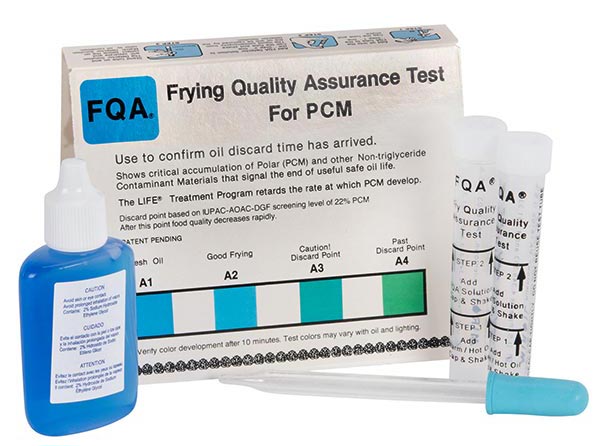
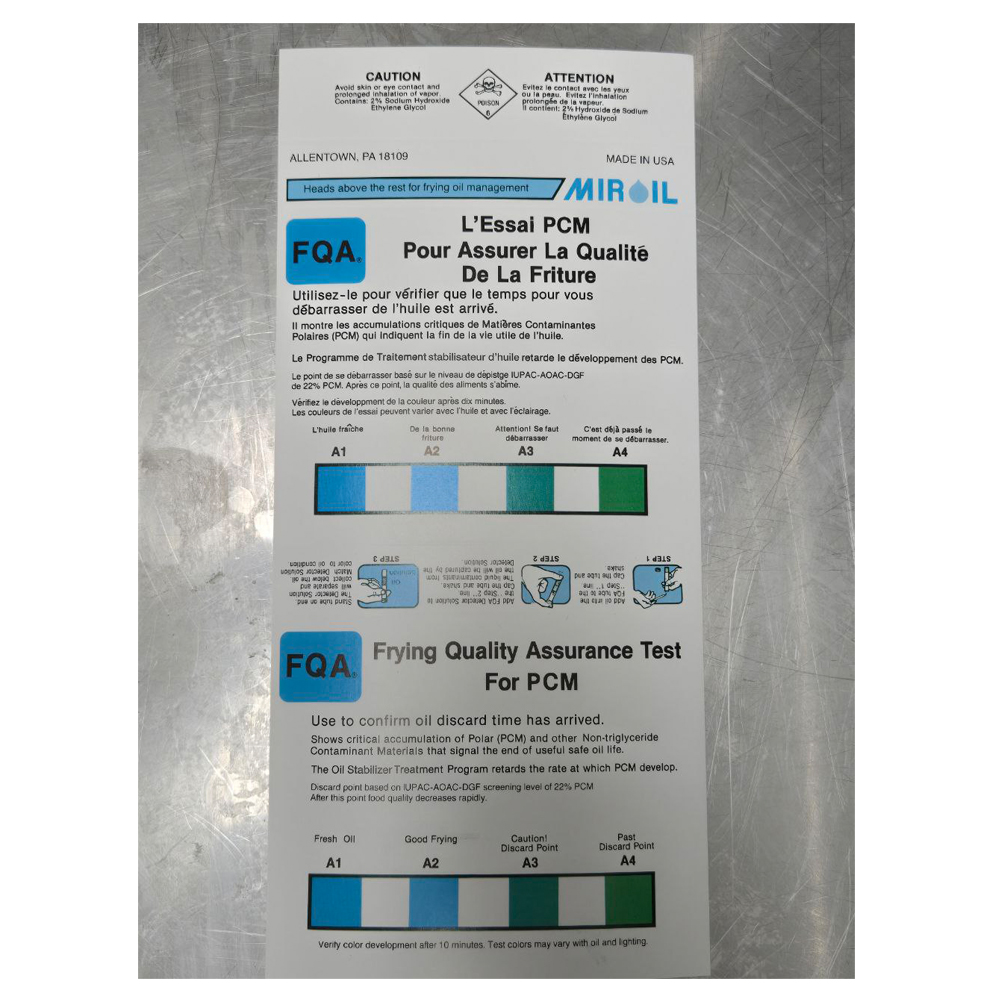
The Miroil PCM Test Kit measures the accumulation of Polar Contaminant Material (PCM) in frying oil.
During normal frying operations, oil is exposed to heat, oxygen, moisture, and food particles. Over time, this exposure causes oxidation, polymerization, and thermal breakdown. As oil degrades, polar compounds form and accumulate within the oil.
These compounds include oxidized triglycerides, polymerized fats, aldehydes, ketones, and secondary breakdown by-products — all of which signal declining oil quality. PCM testing identifies when this accumulation reaches a critical level, signaling that the oil has reached the end of its usable frying life.
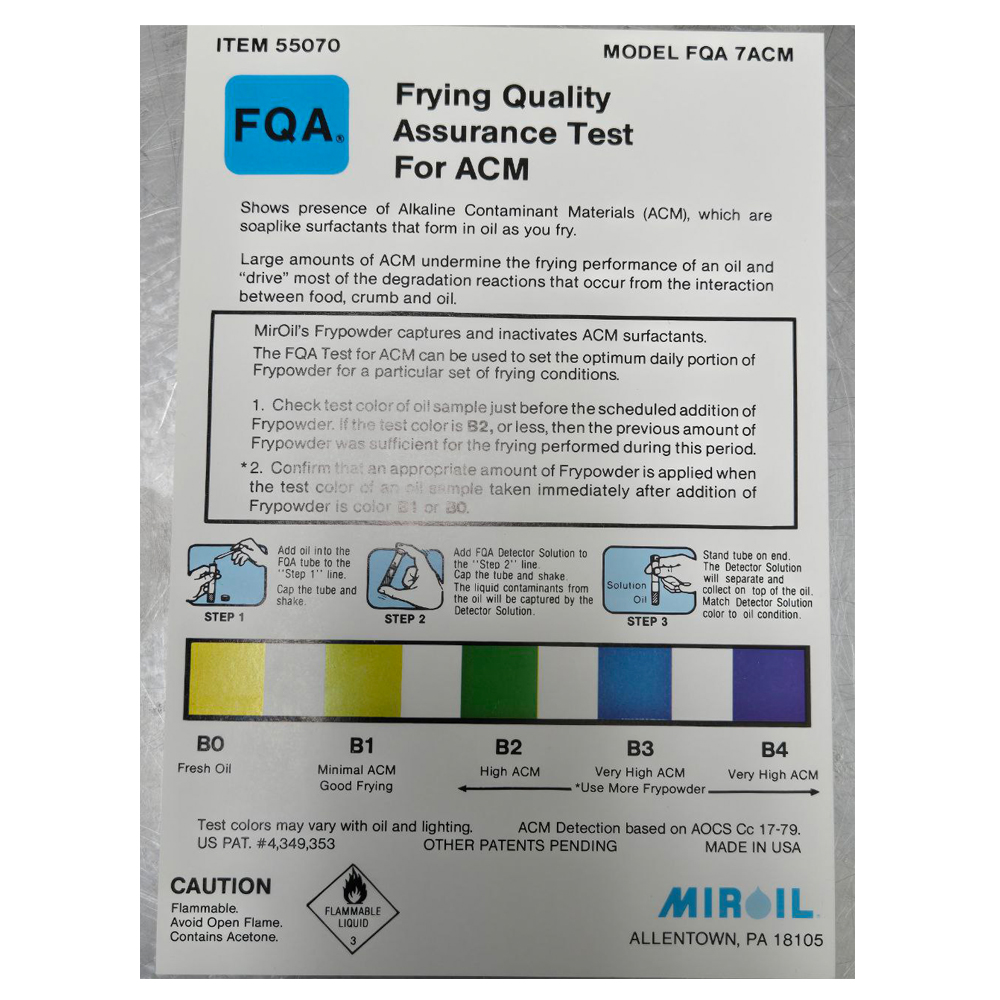
ACM testing measures Alkaline Contaminant Materials in frying oil.
As oil degrades, reactive alkaline surfactant-type compounds can form. These substances influence oil behavior, particularly in areas such as foaming, surface instability, and frying performance.
ACM testing focuses on identifying these reactive breakdown components during earlier stages of degradation. It provides insight into certain chemical changes occurring in oil during active use.
While PCM testing determines when oil has reached its discard point, ACM testing is often discussed in technical contexts as a way to monitor reactive breakdown during earlier stages of oil use.
PCM vs. ACM — What’s the Practical Difference?
Both PCM and ACM relate to oil degradation, but they measure different characteristics of deterioration.
PCM testing measures total polar compound accumulation and is widely used as an end-of-life indicator for frying oil. It provides a clear discard threshold and supports structured oil replacement programs.
ACM testing focuses on reactive alkaline breakdown components that influence oil performance during active use.
For commercial kitchens focused on establishing consistent, measurable oil replacement standards, PCM testing provides a practical and objective method for managing oil life, improving product consistency, and supporting operational control.
Visual inspection and odor assessment alone are subjective and inconsistent. Structured PCM testing removes guesswork from oil management programs and provides a clear, repeatable quality control process.
Miroil 3-Minute Quality Assurance PCM Test Kits
Miroil PCM Test Kits are designed specifically for commercial kitchens and foodservice environments. Each kit delivers approximately three-minute quality assurance testing through a simple vial-based procedure with clear visual results. No laboratory equipment is required, making them well suited to fast-paced operations.